
As we’ve discussed before, WordPress is different from the other approaches to building websites we’ve learned this semester. So, not surprisingly, moving a WordPress site is different, too.
Read on to learn how to move a WordPress installation from one server to another server AND how to move an install around on your own server!
On serve(r)
First, it’s super important to remember that a WordPress site consists of files and a database, both of which are stored on your server. Unlike the static websites we’ve built this semester, WordPress also stores information about your site’s location in its database. That means that you need to be very cautious when doing anything having to do with moving or renaming WordPress.
If something goes wrong during a move, you’ll need a backup to recover your work. Your hosting provider may have automatic backups available, but those aren’t guaranteed to contain your most recent changes.1Make absolutely certain you’ve selected the original installation, not your new clone, and that you have a current backup before proceeding. Also, review the uninstall options carefully to confirm exactly what will be removed.
Moving to another server
What if you want to move your WordPress site to a different server?2
There are many ways to do this, but the following has worked reliably for us.
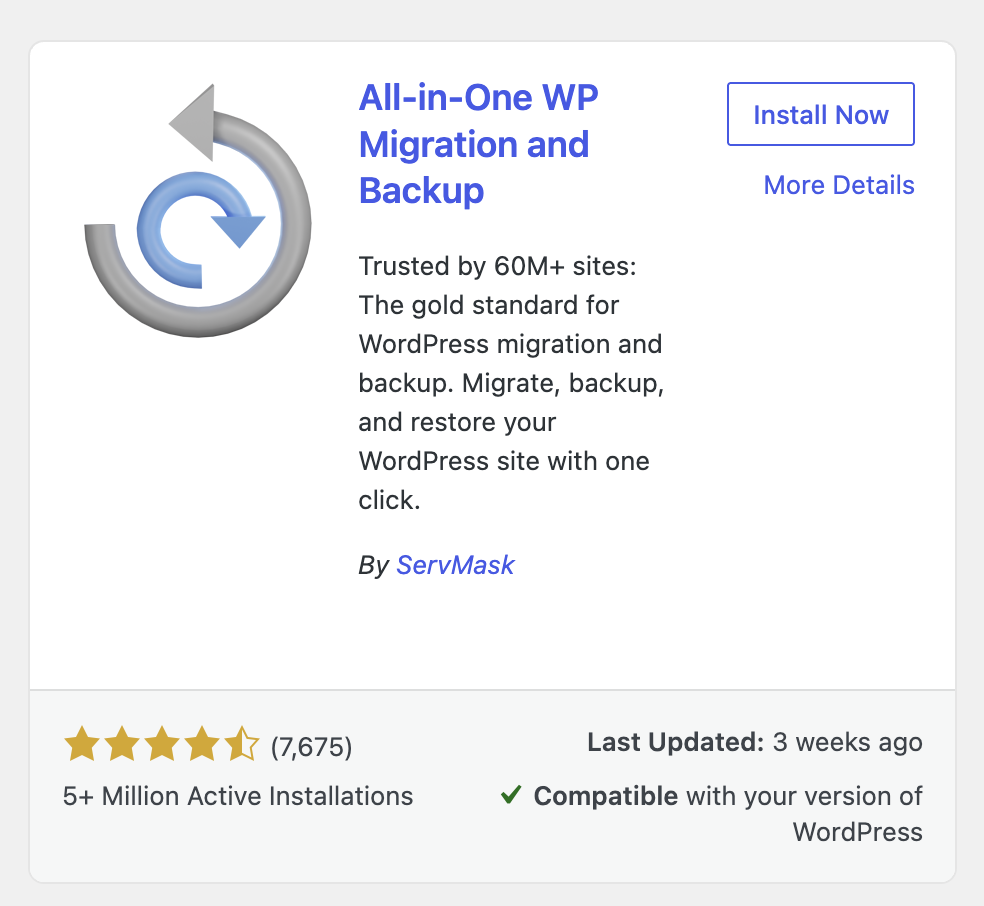
All-in-One WP Migration
On your source install (likely on your own server), install and activate the All-in-One WP Migration and Backup plugin.
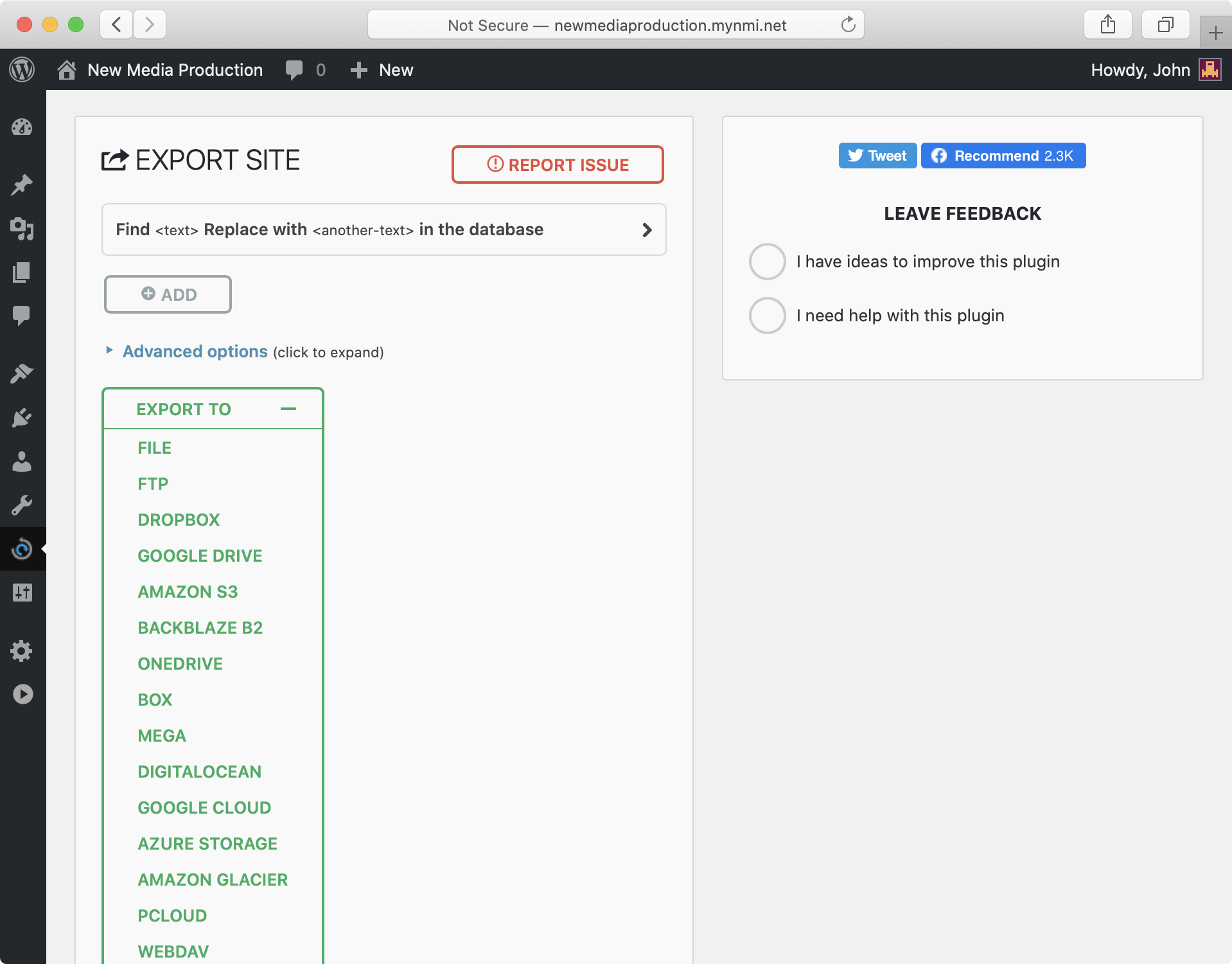
Once activated, click on “All-in-One WP Migration and Backup” in the WordPress sidebar. Then, choose Export To > “File”
Depending on the size of your site, you’ll likely have to wait a bit. Then, click the annoying bouncing download button:
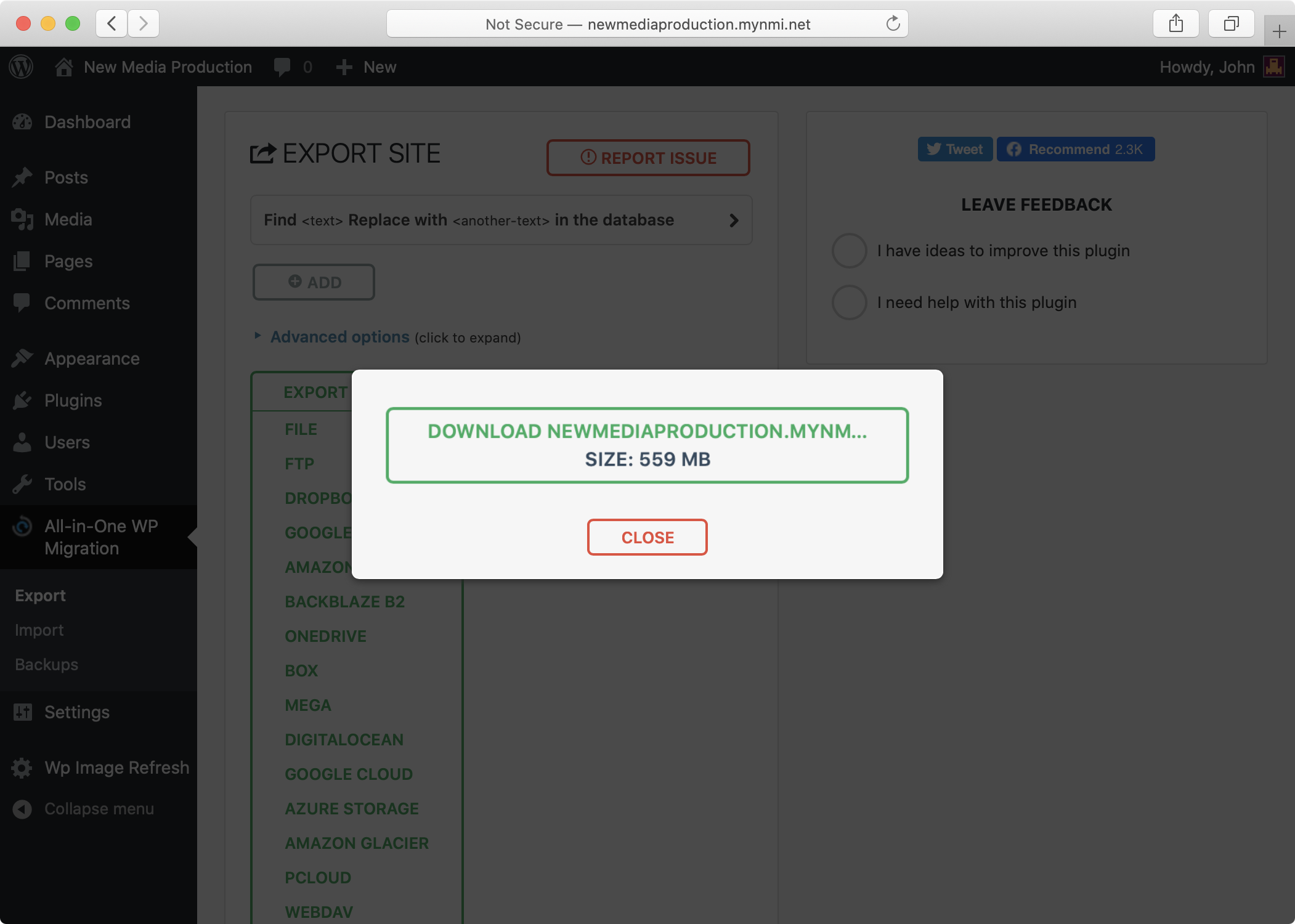
Having trouble downloading your backup? If the download button doesn’t work, try another browser or an incognito window. You can also retrieve your .wpress file directly from your hosting account’s File Manager.
Next, on your destination server (your client’s new site), create a new WordPress install. Don’t worry too much about its configuration, as that will shortly be overwritten.
Still on your destination server, install the All-in-One WP Migration plugin again. Next, click on “All-in-One WP Migration” in the WordPress sidebar. Choose Import From > “File”:
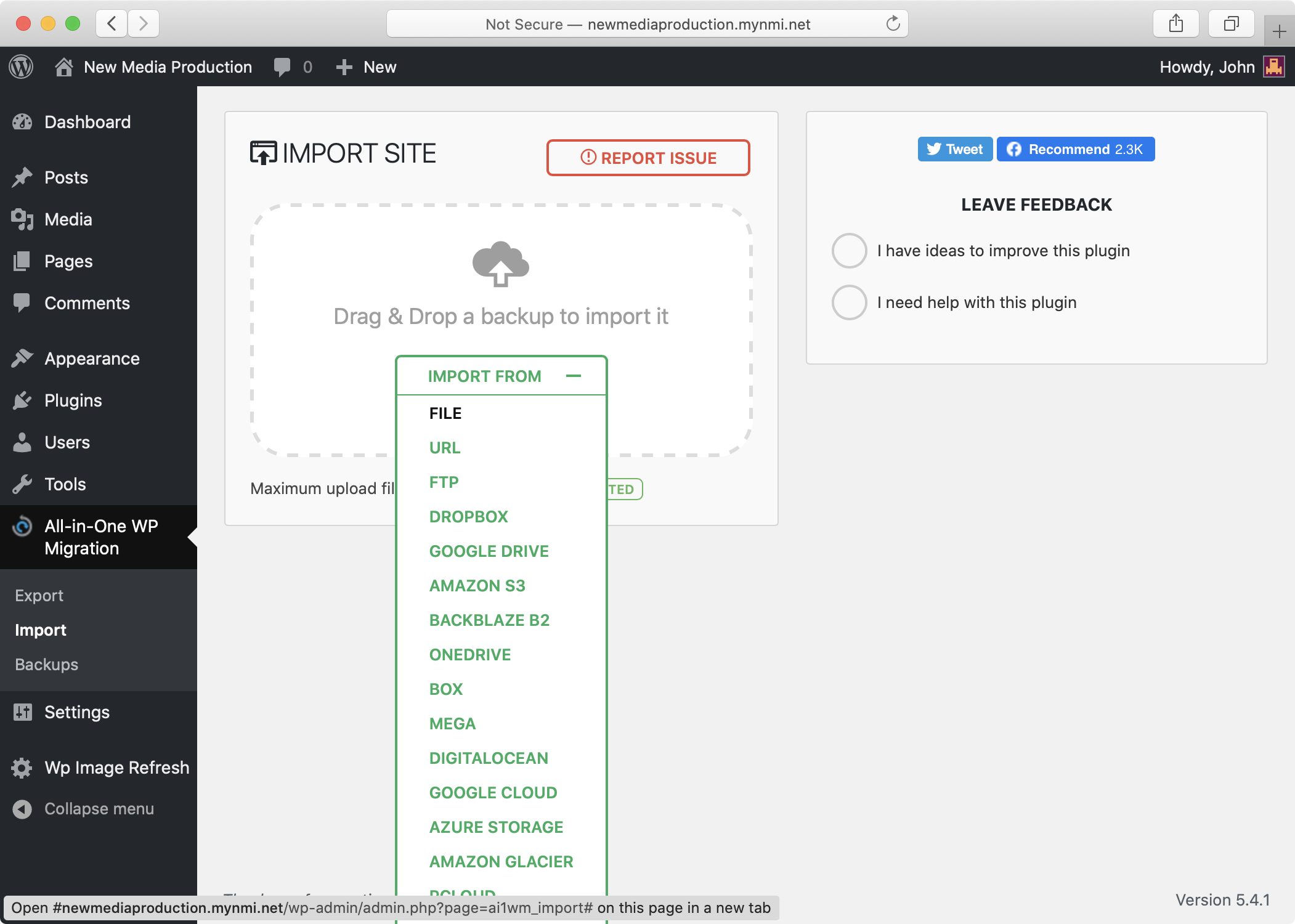
Select the file you just downloaded from your source install, and follow the on-screen steps. To log in to your newly-migrated install on your destination server, you’ll need to use the same WordPress username and password as on your source server.
In a few isolated cases, there are other paths to recovery, but don’t count on them.[footnote]
Before you move anything: Back it up!
Before attempting either of the methods below, create a fresh backup of your WordPress site and download it to your computer. You can follow the instructions in Backing Up a WordPress site.
This is especially important if you’ve spent a significant amount of time building your site. You don’t want to discover that your only backup is several days old after something goes wrong!
Moving on your own server
Don’t just drag and drop!
With Project 1 and Project 2 (and really, any site made only of static files), you could just move project folders around at will. With WordPress, which depends on a precisely structured set of files linked to a database, not so much.
So, rule number one: if you want to move (or rename) your WordPress install on your own server, don’t just drag and drop. What should you do instead?
Clone yourself
If you need to move a WordPress installation to a different directory on the same Reclaim Hosting account, Installatron’s Clone feature provides a relatively straightforward solution.
Cloning creates a second copy of your WordPress installation in a new location. It doesn’t automatically delete or move the original, which is actually a good thing! You can check that the new installation works before removing the old one.
Let’s look at how to do that.
Log into cPanel, and click on the WordPress icon
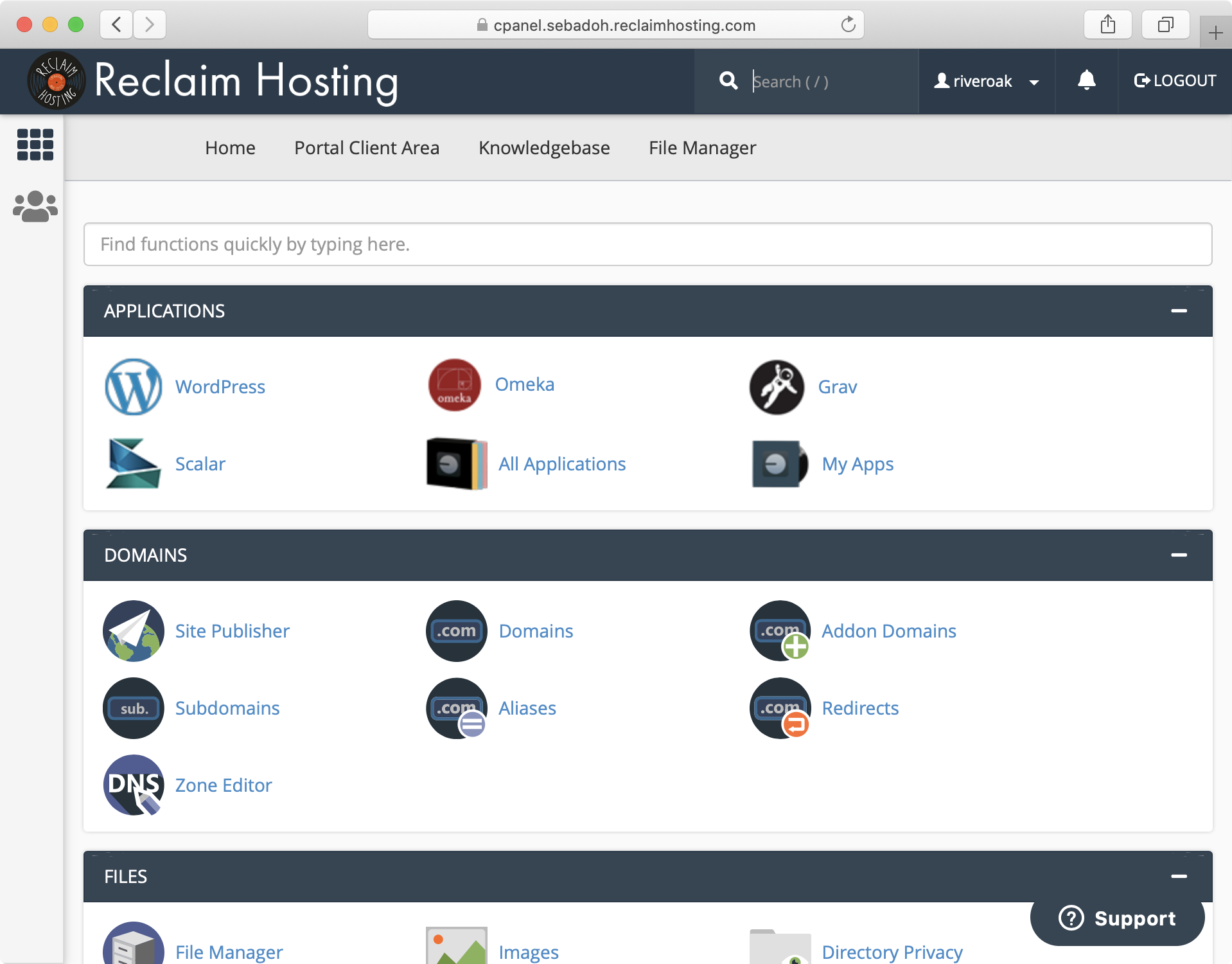
Then, click “My Applications”:
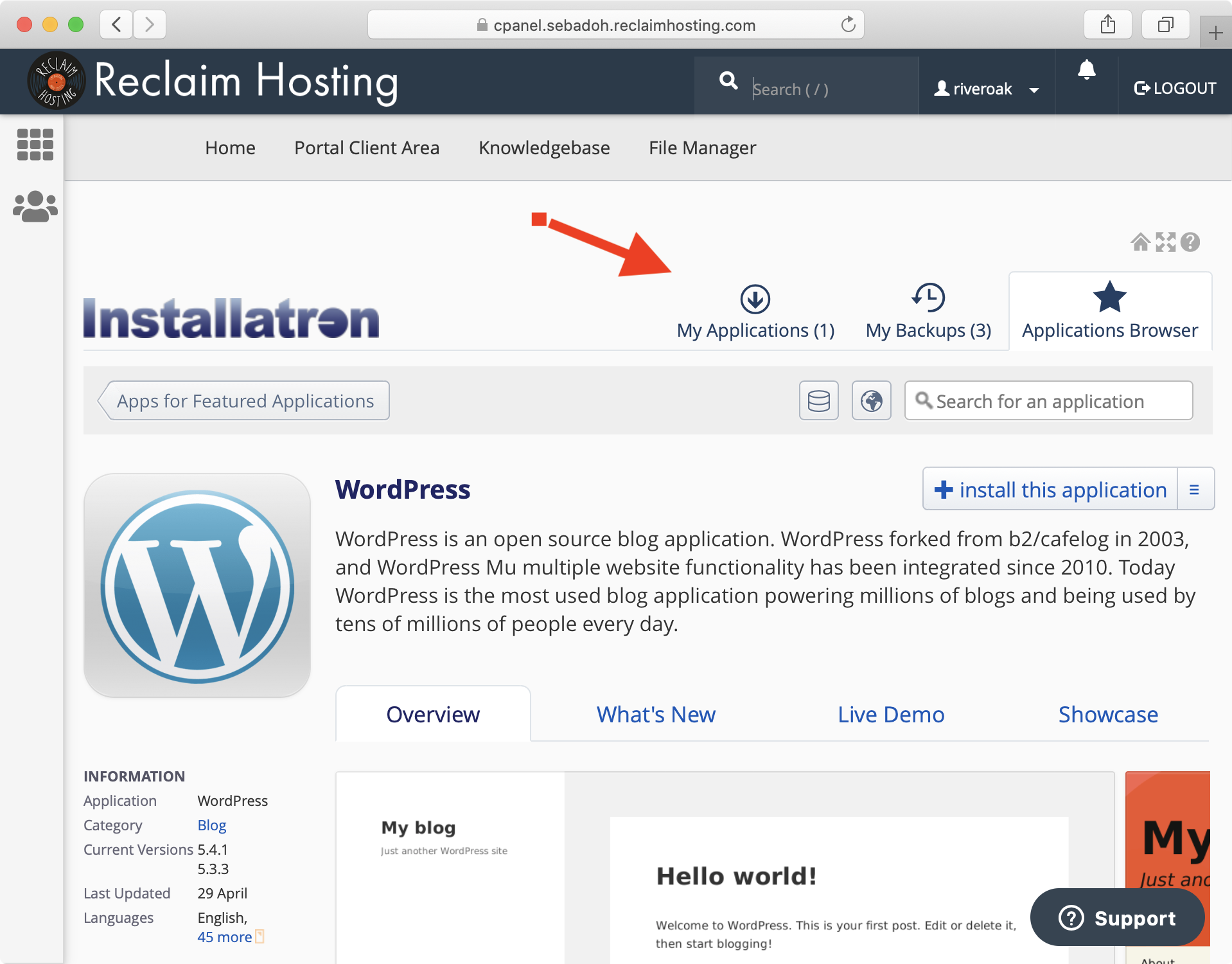
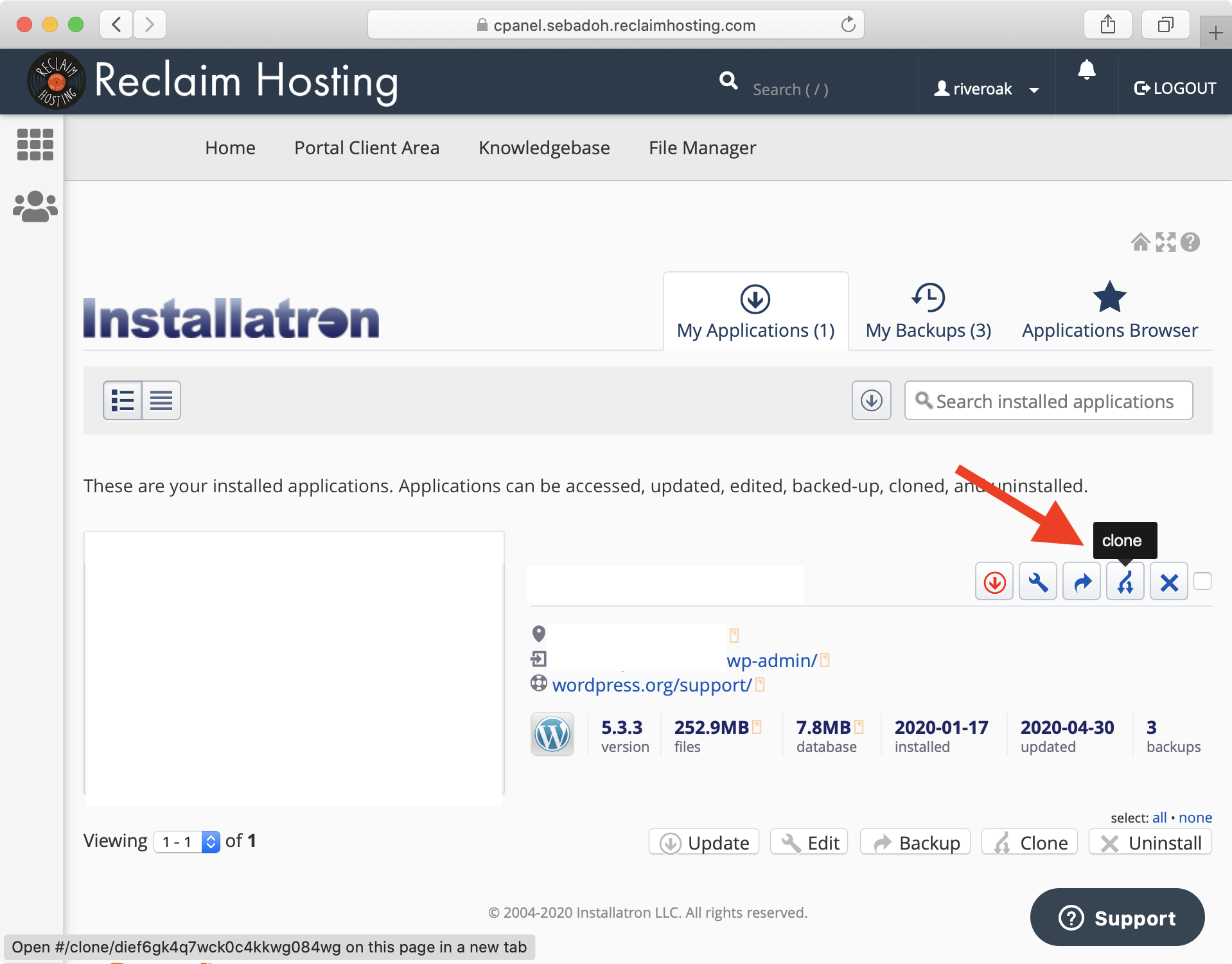
Then, click Clone, being sure to use the set of icons on the same horizontal line as the install you want to clone:
On the next screen, you’ll see a bunch of options, but the most important setting to change is the destination directory. Make sure you enter the new location where you want your WordPress site to live.
For example, if your original WordPress installation lives at:
yoursite.com/webdev/wordpressAnd you want it to live at:
yoursite.com/webdev/project-threeYou’ll need to specify the appropriate destination directory in Installatron.
Double-check that the destination directory doesn’t already contain files or another WordPress install that you want to keep. Installatron may refuse to clone your site into a directory that already contains files. And if existing files are overwritten or mixed with your cloned WordPress installation, you could end up with a broken site or lose work. The safest approach is to choose an empty directory for your clone.
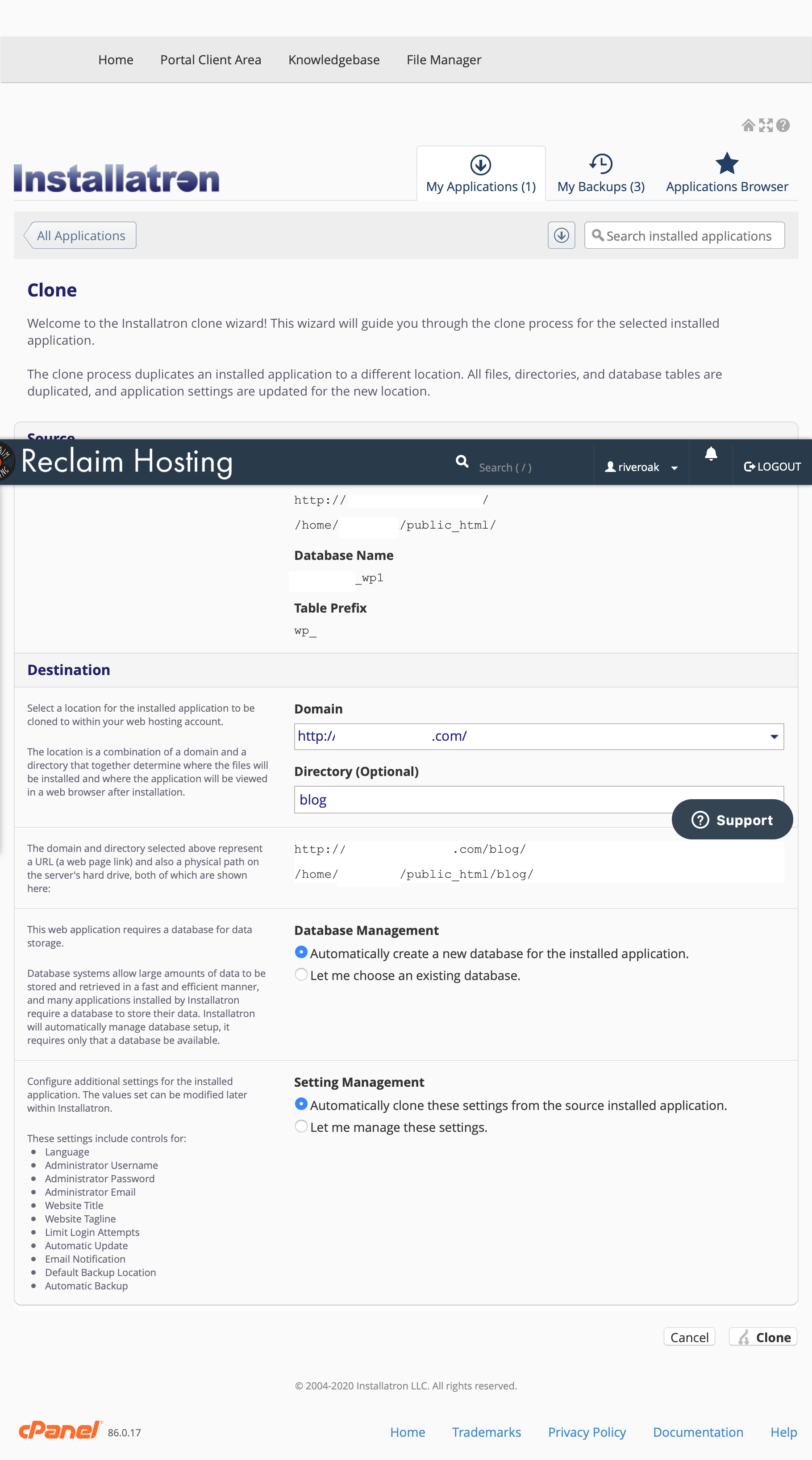
Then, click “Clone”, wait a minute, and you’ll be off to the races.
Your login credentials for your cloned install will be the same as your original installation, except you’ll now login at
yoursite.com/new-location/wp-admininstead ofyour site.com/original-location/wp-admin.Remember that you now have two separate WordPress installations. Changes you make to one won’t automatically appear on the other.
Verify your clone before deleting anything
Once you’ve logged into your cloned site, make sure everything looks and functions as expected. Check your pages, images, navigation, plugins, and theme. You should also test the new URL in a private or incognito browser window to make sure it works for visitors who aren’t logged in.
If everything looks good, you can decide whether to keep the original installation or delete it.
After logging into the new install and verifying that everything is as it should be (and it should, unless you have some complex plugins that require you to specify specific URLs), you can delete your original install.
Deleting a WordPress Installation
But don’t just open your FTP client and delete the WordPress files! Remember, WordPress consists of both files and a database. Deleting the files through FTP won’t remove the database, leaving behind an incomplete installation and potentially confusing Installatron’s records.
Instead, return to Installatron in cPanel and use its Uninstall feature to remove the original installation. This allows Installatron to clean up the files, database, and installation records together.
Be extremely careful, though! The UI for doing this can be a bit confusing, so quadruple-check everything before clicking delete. [footnote]The main source of confusion? The “Delete” button, as with the “Clone” button, maps to the install that’s on the same horizontal line as the install name, but if you have multiple installs, it can look like the button to delete something is beneath that install’s details, and you can easily accidentally delete a different install.↩
This most often happens in this course if you’re building a site for a friend or family member for your final project, but they haven’t yet purchased a domain (and so you go ahead and start building on your own server.↩