
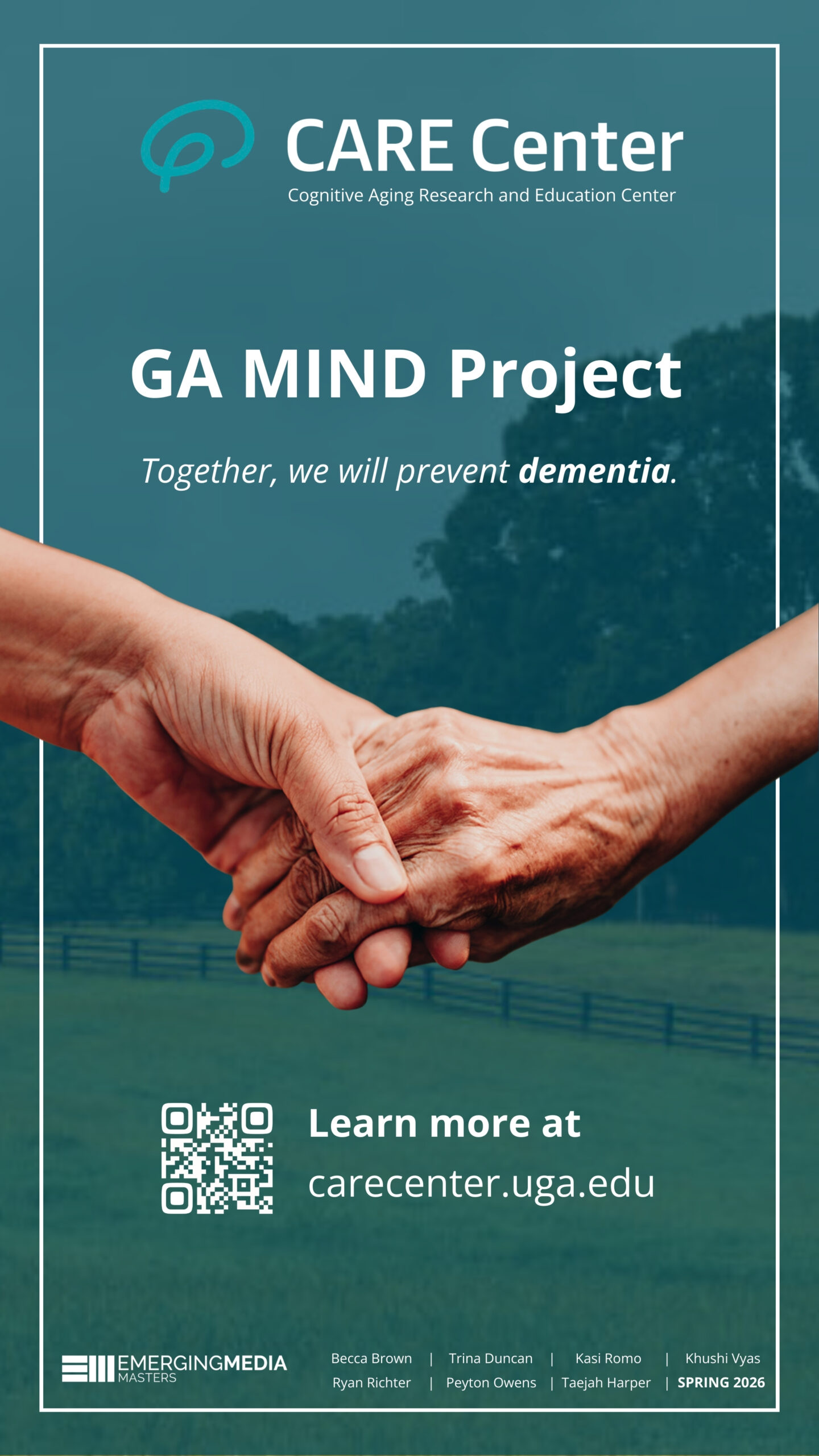
The University of Georgia’s Cognitive Aging Research and Education (CARE) Center is a clinical, research, and outreach hub dedicated to improving access to dementia-related services across rural Georgia. It provides dementia risk-reduction education, diagnostic services such as cognitive testing and neuroimaging, and post-diagnosis support including care planning, behavioral interventions, and caregiver resources — all grounded in the latest research. Through partnerships with UGA’s Cooperative Extension, Archway Partnership, and other organizations in rural Georgia, the CARE Center extends its impact to underserved communities statewide.
With this mission in mind, reaching rural Georgians remains a significant challenge for the CARE Center. Many of these communities face barriers such as limited technological education, geographic isolation, and a cultural distrust of research institutions, which makes promotion and outreach difficult. Along with this, it can be a challenge to create sustained support and long-term participation within these rural communities. These challenges present an important opportunity: develop new strategies that build awareness and trust, encourage ongoing involvement, and ensure rural communities fully benefit from the CARE Center’s resources and expertise.
Adapting the CARE Center’s promotional approach to the needs of rural communities increases visibility and strengthens long-term connections. Billboards, radio ads, and pamphlets deliver trusted, locally grounded messaging, while Instagram and Facebook reels and posts engage younger family members and caregivers who influence health decisions. A redesigned website with integrated surveys creates an easy-to-navigate channel for those who find technology a challenge, and raffles encourage ongoing interaction rather than one-time participation. By tailoring outreach through both traditional and digital strategies, the CARE Center builds trust, fosters sustained engagement in research, and ensures its services remain accessible and meaningful to the people who need them most.